
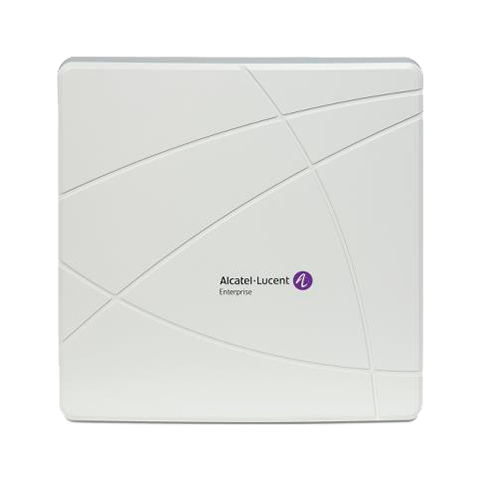
Description
Radio specification
• AP type: Outdoor, dual radio, 5 GHz 802.11ac 2×2:2 MU-MIMO and 2.4 GHz 802.11n 2×2:2 MIMO
• 5 GHz: 2*2 MIMO with two spatial stream, up to 867 Mb/s wireless data rate
• 2.4 GHz: 2*2 MIMO with two spatial stream, up to 400 Mb/s wireless data rate to individual 2×2 VHT40 client devices
(300 Mb/s for HT40 802.11n client devices)
• Supported frequency bands (country specific restrictions apply):
¬ 2.400 to 2.4835 GHz
¬ 5.150 to 5.250 GHz
¬ 5.250 to 5.350 GHz
¬ 5.470 to 5.725 GHz
¬ 5.725 to 5.850 GHz
• Available channels: Dependent on configured regulatory domain
• Brazil: Frequency band 5.150 to 5.350 GHz is disabled. Maximum transmit power: 28dBm on 2.4GHz, 23dBm on 5GHz
• DFA (dynamic frequency adjustment) optimizes available channels and provides proper transmission power
• Short guard interval for 20 MHz, 40 MHz, and 80 MHz channels
• Transmit beam forming (TxBF) for increased signal reliability and range
• 802.11n/ac packet aggregation: Aggregated Mac Protocol Data Unit (A-MPDU), Aggregated Mac Service Data Unit (A-MSDU)
• Supported data rates (Mb/s):
¬ 802.11b: 1, 2, 5.5, 11
¬ 802.11a/g: 6, 9, 12, 18, 24, 36, 48, 54
¬ 802.11n: 6.5 to 300 (MCS0 to MCS15)
¬ 802.11ac: 6.5 to 867 (MCS0 to MCS9, NSS = 1 to 2)
• Supported modulation types:
¬ 802.11b: BPSK, QPSK, CCK
¬ 802.11a/g/n/ac: BPSK, QPSK, 16-QAM, 64-QAM, 256-QAM
• 802.11n high-throughput (HT) support: HT 20/40
• 802.11ac very high throughput (VHT) support: VHT 20/40/80
• Advanced Cellular Coexistence (ACC Minimizes interference from 3G/4G cellular networks, distributed antenna systems, and
commercial small cell/femtocell equipment
Interfaces
• 1x 10/100/1000Base-T autosensing (RJ-45) port, Power over Ethernet (PoE)
• 1x 10/100/1000Base-T autosensing (RJ-45) port
• 1x management console port (Micro-USB)
• Reset button: Factory reset
Visual Indicators (7 LEDs)
• For system and radio status
¬ SYS ON: Power on and system running
¬ SYS Flashing: Bootloader-OS loading or upgrading
¬ 2.4G ON: 2.4GHz SSID created and running
¬ 5G ON: 5GHz SSID created and running
¬ ENET0 ON: Ethernet0 link UP
¬ ENET1 ON: Ethernet1 link UP
¬ RSRV0 Flashing: AP Location
¬ RSRV1: Reserved
Antenna
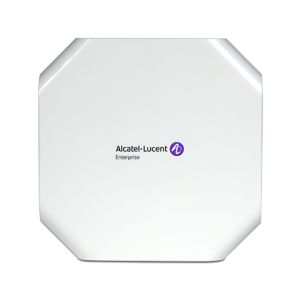
• AP1251: Built-in 2×2:2 @ 2.4GHz, 2×2:2 @ 5GHz
• Integrated dual-band omnidirectional antennas for 2×2 MIMO with maximum antenna gain of 8.46 dBi in 2.4 GHz and
6.62 dBi in 5 GHz.
Receive sensitivity (per chain)
2.4 – 5 GHz
1 Mb/s -96
11 Mb/s -88
6 Mb/s -92 -91
54 Mb/s -74 -74
HT20 (MSC 0/8) -91 -91
HT20 (MSC 7/15) -71 -73
HT40 (MSC 0/8) -88 -88
HT40 (MSC 7/15) -68 -69
VHT20 (MSC 0) -91 -91
VHT20 (MSC 8) -67 -68
VHT40 (MSC 0) -88 -88
VHT40 (MSC 9) -63 -64
VHT80 (MCS0) -85
VHT80 (MCS9) -60
Maximum Transmit power (per chain)
2.4 5 GHz
1 Mb/s 20 dBm
11 Mb/s 20 dBm
6 Mb/s 20 dBm 20 dBm
54 Mb/s 20 dBm 20 dBm
HT20 (MSC 0/8) 20 dBm 20 dBm
HT20 (MSC 7/15) 20 dBm 20 dBm
HT40 (MSC 0/8) 20 dBm 20 dBm
HT40 (MSC 7/15) 20 dBm 20 dBm
VHT20 (MSC 0) 20 dBm 20 dBm
VHT20 (MSC 8) 19 dBm 20 dBm
VHT40 (MSC 0) 20 dBm 20 dBm
VHT40 (MSC 9) 19 dBm 19 dBm
VHT80 (MCS0) 20 dBm
VHT80 (MCS9) 19 dBm
Power
• Maximum (worst case) power consumption:
¬ <11.8W (802.3af PoE)
¬ Maximum power consumption in idle mode: 5.3 W
• Power over Ethernet (PoE):
¬ 48 V DC (nominal) 802.3af source
Mounting
• Pole/wall mounting (mounting kit shipped by default with the AP)
Environmental
• Operating:
¬ Temperature: -40°C to 65°C (-40°F to +149°F)
¬ Humidity: 5% to 95% non-condensing
• Storage and transportation:
¬ Temperature: -40°C to +85°C (-40°F to +185°F)
• Chassis rating: IP67
• Wind resistance:
¬ Up to 100 MPH sustained winds
¬ Up to 165 MPH wind gusts
Dimensions/weight
• Single AP excluding packing box and accessories:
¬ 243 mm (W) x 243 mm (D) x 85 mm (H) -9.56” (W) x 9.56” (D) x 3.34” (H)
¬ 2230 g/4.91 lb
• Single AP including packing box and accessories:
¬ 344 mm (W) x 341 mm (D) x 220 mm (H) 10.32” (W) x 10.23” (D) x 8.66” (H)
¬ 4025 g/8.87lb
Reliability
MTBF: 963,053h (109.93 years) at +25ºC operating temperature
Capacity
• Up to 8 SSID per radio (total 16 SSID)
• Support for up to 512 associatedclient devices per AP
Software feature
• Up to 4K APs when managed by OV2500. No limit on number of AP groups
• Up to 256 APs per web managed (HTTP/ HTTPS) cluster
• Auto channel selection
• Auto transmit power control
• Bandwidth control per SSID
• L2 roaming
• L3 roaming with OmniVista 2500
• Captive portal (Internal/ External)
• Guest self-registration (optional SMS notification) with OmniVista 2500
• Internal user database
• RADIUS client
• Guest social-login with OmniVista 2500
• RADIUS proxy authentication OmniVista 2500
• LDAP/AD proxy authentication OmniVista 2500
• Wireless QoS
• Band steering
• Client smart load balance
• Client sticky avoidance
• User behavior tracking
• White/black list
• Zero-touch provisioning (ZTP)
• NTP server client
• ACL
• DHCP/DNS/NAT
• Wireless MESH P2P/P2MP
• Wireless Bridge
• Rogue AP location and containment
• Dedicated Scanning AP
• System log report
• SNMPv2 & v3
• SNMP Trap Notification
• Wireless attack detection
• Floor plan and heat map with OmniVista 2500™
• Stanley Healthcare/Aeroscout RTLS support
Security
• 802.11i, Wi-Fi Protected Access 2 (WPA2), WPA, AES 128-256 bits
• 802.1X
• WEP, Advanced Encryption Standard (AES), Temporal Key Integrity Protocol (TKIP)
• Firewall: ACL, wIPS/wIDS and DPI application policy enforcement with OmniVista™
• Portal page authentication
• Integrated Trusted Platform Module (TPM) for secure storage of credentials and keys
IEEE standard
• IEEE 802.11a/b/g/n/ac Wave 2
• IEEE 802.11e WMM
• IEEE 802.11h, 802.11i, 802.11e QoS
• IEEE 802.1Q (VLAN tagging)
• 802.11k Radio Resource Management
• 802.11v BSS Transition Management
• 802.11r Fast Roaming
Regulatory & certification
• CB Scheme Safety, cTUVus
• Wi-Fi Alliance (WFA) certified 802.11a/b/g/n/ac
• FCC
• CE Marked
• RoHS, REACH, WEEE
• ASTM B117-07A, Salt spray testing per UL50 NEMA 4x
• EMI and susceptibility (Class B)
• Wi-Fi CERTIFIED Wi-Fi 5, Enhanced Open™, Passpoint®
• VCCI-CISPR 32:2016, CLASS B

Reviews
There are no reviews yet.